

Understanding the USMLE Step Exams

Updated: Apr 15, 2024
Table of Contents:
Step 2 Clinical Knowledge (CK)
Step 1
Overview:
The USMLE Step 1 is the first part of the three-step examination process for medical licensure in the United States.
Designed to assess a medical student's basic science knowledge, including principles of anatomy, behavioral sciences, biochemistry, microbiology, pathology, pharmacology, and physiology.
Exam Day Outline:
This is a one-day examination, divided into seven 60-minute blocks and administered in one 8-hour testing session. The number of questions per block on a given examination form may vary, but will not exceed 40. The total number of items on the overall examination form will not exceed 280.
Includes a minimum of 45 minutes of designated break time, with an optional 15-minute tutorial that can be added to the break time by skipping it.
Scoring System:
Since January 26, 2022, the scoring system has transitioned from numerical scoring to a pass/fail outcome.
Results for computer-based examinations (Step 1, Step 2 CK, and Step 3) are typically available within four weeks of your test date; usually reported on Wednesdays.
Study Resources:

First Aid for the USMLE Step 1 - This textbook is hands-down the best I've ever encountered in the medical field. They call it the "Bible of Medical School" for a reason. Every single line is packed with high-yield information; make sure you dive into this book with total dedication.

UWorld - With nearly 4000 USMLE Step 1 sample questions, UWorld stands out as the best question bank to strengthen your foundational knowledge. It provides detailed explanations that not only help solidify your understanding but also refine your ability to eliminate incorrect options. Each explanation clarifies why a certain choice is incorrect, making it an invaluable resource for mastering the art of ruling out. Check out the UWorld Step 1 pricing plans here. Note: This might be subjective, but UWorld surpasses Amboss for Step 1 preparation, and there isn't a need to do both since UWorld comprehensively covers the majority of topics tested on the exam.
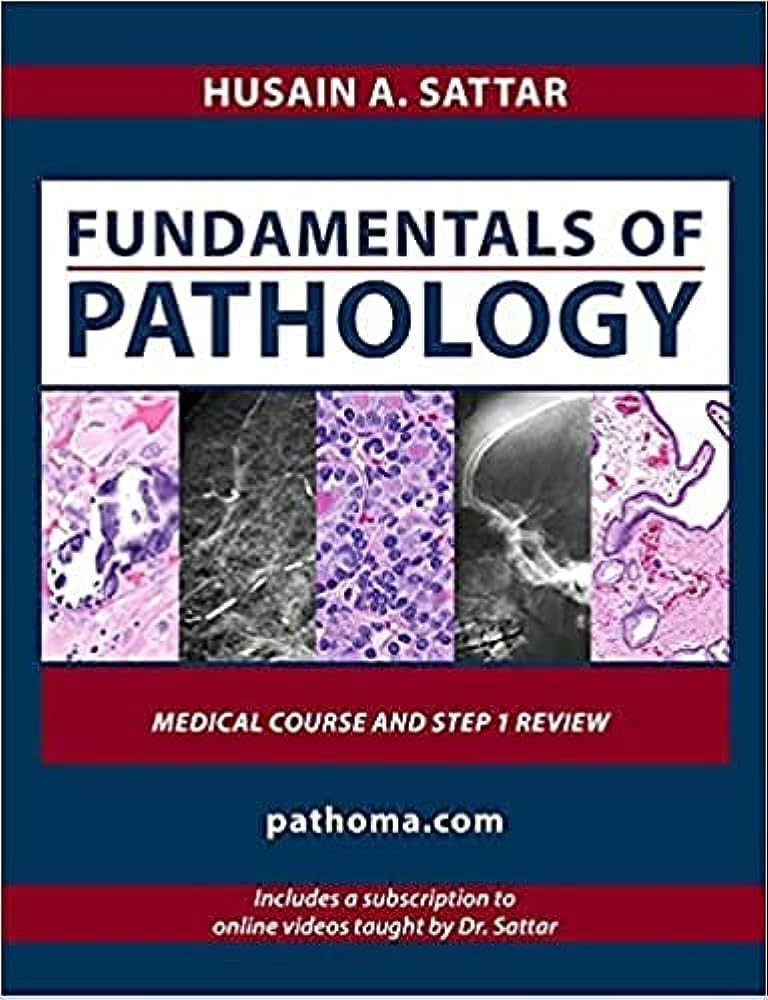
Pathoma - This is the best resource for honing your concepts in Pathology, and works best as a supplement to Robbins during your second year of medical school. When it comes to preparing for Step 1, if you have a strong knowledge base, I'd recommend sticking to Pathoma only for your weaker concepts, since suspension of the numerical score has made this exam comparatively easier. Note: A broader, but essentially similar video series called Boards & Beyond is another very useful study resource that you can incorporate in your Step 1 preparation, especially for your weaker topics.
Sketchy - Utilizes a visual mnemonic approach to help students memorize microbiology, pharmacology, and pathology through engaging illustrations and stories. Personally, not a fan, but it works wonders for people who thrive on visual learning. If you're someone who would be interested, check it out.

Anki Flashcards - A digital flashcard app that uses spaced repetition to help students memorize and retain information efficiently. For Step 1, I used this mainly as a revision tool a month before my exam. Definitely worth a try! To download the Anki application, click here.

NBME Self-assessments - The National Board of Medical Examiners (NBME) offers self-assessment exams called CBSSA (Comprehensive Basic Science Self-Assessment) that simulate the format and content of the actual Step 1 exam. CBSSA contains four sections of 50 items; 200 total multiple choice items. Taking these practice exams can help you gauge your readiness and identify areas for improvement. As on the real exam, there is no numerical scoring for these assessments; instead, you get your result as a percentage along with your probability of passing should you take the test in the same week. Currently, there are 6 self-assessments on the NBME website ranging from Form 26 to 31. Note: A percentage of 65% or above on your first assessment is a decent score, and you should strive to gradually work your way up from there to anywhere above 70%.
UWorld Self-Assessments (UWSAs) - A general rule of thumb is to take your UWSAs towards the end, approximately 15 days before your actual exam. These assessments consist of 4 blocks of 40 questions each, and unlike the real exam, they provide a numerical score.
Free 120 - 3 blocks of questions on the official NBME website. Students usually take this within a week before their test day. This is reported as a percentage score. You can check out the Step 1 Free 120 here.
Preparation Time: 3 to 5 months.
Bottom Line:
The ultimate battle plan (which worked for me) would be to follow this sequence:
Get started with First Aid as soon as possible. Finish reading any one chapter of the 'General Principles' section (Immunology, Microbiology, Pathology or Pharmacology) except Biochemistry, and any one chapter of the organ systems.
Buy UWorld and commit yourself to solving 1 block (40 questions) on a daily basis. I cannot stress how important it is to review your question blocks on the same day; DO NOT push it off onto the next day because, believe me my friend, that block is never going to be reviewed if not on the same day.
Make sure to flag any questions you got wrong, along with those you got right but still had doubts about. After completing your first round of UWorld, focus your 2nd UWorld round on these flagged questions instead of mindlessly going through the entire question bank again, which is unnecessary and redundant.
Start taking your NBME mocks (I solved 4 of them) well in advance (a little more than a month before your test date) so that you have time to reflect on your weaker topics, and be prepared enough to go to the Prometric Center confident and stress-free.
Throughout this daunting process, try to master the art of solving questions. Be mindful of the fact that there are two ways of answering a question; even if you're unsure of the correct answer, you can still eliminate options and work towards finding the right one. Cheers!
Step 2 Clinical Knowledge (CK)
Overview:
The USMLE Step 2 CK is the second part of the three-step examination process for medical licensure in the United States.
Designed to assess a medical student's clinical science knowledge, including principles of internal medicine, pediatrics, surgery, obstetrics & gynecology, psychiatry, neurology, and public health.
Exam Day Outline:
This is a one-day examination. It is divided into eight 60-minute blocks and administered in one 9-hour testing session. The number of questions per block on a given examination will vary but will not exceed 40. The total number of items on the overall examination will not exceed 318.
Includes a minimum of 45 minutes of designated break time, with an optional 15-minute tutorial that can be added to the break time by skipping it (Same as Step 1).
Scoring System:
You get a three digit numerical score.
The current passing score for Step 2 CK is 214.
Results for computer-based examinations (Step 1, Step 2 CK, and Step 3) are typically available within four weeks of your test date; usually reported on Wednesdays.
Study Resources:
UWorld - With around 4250+ questions, UWorld still stands tall as the gold standard question bank for Step 2 CK preparation. Check out the UWorld Step 2 CK pricing plans here. Note: First Aid for USMLE Step 2 is not a very well-studied textbook and most students (including me) just use UWorld as their primary prep source. Make sure you're diligent in your reviews, and prepare flashcards within UWorld itself.
Amboss - With the only objective score for the programs to rank you, Step 2 CK is a crucial component of your application. While UWorld covers most topics comprehensively, Amboss offers some unique study blocks on Ethics, Biostatistics, High-Yield Screening Guidelines, and Risk Factors that aren't available on UWorld. You shouldn't miss out on these! Explore Amboss for Step 2 CK right here.
Anki Flashcards - Since there isn't a specific textbook for Step 2 CK, you can use a lot of decks like the Zanki Step 2 deck in the initial stages of your preparation to get a hang of the subjects as you dive into solving UWorld blocks. I personally used it to get oriented to the Step 2 syllabus, rather than using it as a revising tool.
CMS (Clinical Mastery Series) Forms - These are subject-wise self-assessments that contain one section of 50 MCQs, scored from 1 to 29. It's a helpful study resource for working on your weaker topics, after you're done with your primary question bank (UWorld/Amboss).
NBME Self-Assessments - As in Step 1, NBME offers self-assessments for Step 2 CK called Comprehensive Clinical Science Self-Assessment (CCSSA), which again contains four sections of 50 items; 200 total multiple-choice items. Unlike Step 1, you get a numerical 3-digit score that predicts your performance on the real test. Currently, there are 6 self-assessments on the NBME website ranging from Form 9 to 14. Note: A score of 230 or above on your first assessment is a decent score, and you should strive to gradually work your way up from there to anywhere above 250 (I know this might seem too strict, but trust me, the competition out there demands a score like this).
UWorld Self-Assessments (UWSAs) - A general rule of thumb is to do your UWSAs at the end (around 15 days before your real exam). These comprise of 4 blocks of 40 questions each, and you get a numerical score just like the real deal. They are considered very predictive of your actual score, and I can vouch for that because they were more predictive than NBMEs for me.
Free 120 - 3 blocks of questions on the official NBME website. Students usually take this within a week before their test day. This is reported as a percentage score. For Step 2 CK Free 120, click here.
Preparation Time: 4 to 6 months.
Bottom Line:
The ultimate battle plan (which worked for me) would be to follow this sequence:
Begin your Step 2 CK prep journey by swiftly reviewing the Zanki Step 2 Deck to ensure you're well-prepared before diving into your UWorld question blocks.
After about a week or so, buy UWorld and commit yourself to solving 1 block (40 questions) on a daily basis. Be consistent with your block reviews, and gradually work your way up from one block per day to two blocks. I found 60 questions per day as my sweet spot for the initial few months, but it depends on how much you're handling at a given time.
Again, it's important to flag the questions you answered incorrectly as well as the correct but doubtful ones, because these are the ones you should target during your second UWorld round.
After completing your initial round of UWorld, you have two options: either address weaker areas through CMS forms or proceed with your second round of UWorld focusing on flagged questions. I personally just did one form of Medicine and one of Obstetrics & Gynecology. Reason? I instead decided to jump to random blocks of AMBOSS to be exposed to fresh & unbiased sets of questions.
While you're in the process of doing your second round of UWorld/AMBOSS random blocks, take an NBME assessment to see where you stand (Ideally a little over a month before your exam date).
Keep a minimum gap of 1 week between your mocks (NBMEs/UWSAs), so that you have time to improve and reflect on your mistakes. Keep doing 2 to 3-question blocks in the meantime.
Once again, try to understand and assimilate the art of question-solving. Aim to reach a stage where you can intuitively grasp the answer the examiner is looking for based on the framing and keywords in the question stem.
Step 3
Overview:
The USMLE Step 3 is the third part of the three-step examination process for medical licensure in the United States.
It is NOT MANDATORY to take the Step 3 examination before submitting your residency application. But considering the amount of competition out there especially since this Match Cycle (2024), I would strongly urge you to take your Step 3 before applying or within 2 months of applying.
Assesses whether you can apply medical knowledge and understanding of biomedical and clinical science essential for the unsupervised practice of medicine, with emphasis on patient management in ambulatory settings.
One added benefit of taking Step 3 before residency is that you become eligible for H1B Visa (Work Visa).
Exam Day Outline:
Step 3 is a two-day examination.
The first day of testing includes 232 multiple-choice items divided into 6 blocks of 38-39 items; 60 minutes are allotted for completion of each block of test items. There are approximately 7 hours in the test session on the first day, including 45 minutes of break time and a 5-minute optional tutorial.
There are approximately 9 hours in the test session on the second day. This day of testing includes a 5-minute optional tutorial followed by 180 multiple-choice items, divided into 6 blocks of 30 items; 45 minutes are allotted for completion of each block of test items. The second day also includes a 7-minute CCS tutorial. This is followed by 13 case simulations (CCS cases), each of which is allotted a maximum of 10 or 20 minutes of real time. A minimum of 45 minutes is available for break time.
Scoring System:
You get a three digit numerical score.
The current passing score for Step 3 is 200.
Results for computer-based examinations (Step 1, Step 2 CK, and Step 3) are typically available within four weeks of your test date; usually reported on Wednesdays.
Study Resources:
UWorld - Just like for Step 1 and Step 2 CK, UWorld remains a cornerstone resource for Step 3 preparation. It provides high-quality practice questions that simulate the actual exam format and difficulty level. Click here to check out the UWorld Step 3 pricing plans.
CCSCases - Step 3 introduces a novel testing approach known as CCS (Computer-based Case Simulations), offering a unique evaluation method. During CCS cases, you'll interact with virtual patients by ordering diagnostic tests, prescribing medications, and making management decisions. Your actions will affect the progression of the case, and you'll need to prioritize tasks and manage time effectively. CCSCases.com stands out as the best resource for mastering the art of solving these cases. Unlike the UWorld CCS cases, CCSCases provides a comprehensive evaluation and provides you with an objective score for each case. This feature enables you to identify and reflect on your errors, facilitating a more effective learning process. Check out the CCSCases.com pricing plans here.
Free 120 - Consists of 4 blocks of 40 questions and 6 CCSCases, which closely simulate the real test. As for all the other Step preps, take it at the end about a week or less before your real exam. For Step 3 Free 120, click here.
Preparation Time: 1.5 to 3 months.
Bottom Line:
The ultimate battle plan (which worked for me) would be to follow this sequence:
Preparing for Step 3 is refreshingly straightforward - simply tackle the UWorld question bank, which comprises just half the number of questions compared to Step 1 and Step 2 CK.
While you're at it, start getting oriented to CCS cases on CCSCases.com, because there's a slight learning curve to adapt to the software and how to put in the orders. There are a total of about 170 cases on CCSCases.com, which you should try to finish ideally, but if time is tight, try to do at least 120 of them.
For mock self-assessments, go ahead and complete the UWSA where just like the previous Steps, you get a numerical score report. I only did UWSA-2 because of the conflicting views I had heard about UWSA-1, a lot of them pointing out how it's very under-predictive and detrimental to your confidence.
Lastly, do the Free 120 a couple of days before your exam date and try to get anywhere above 65-70%, and you're good to go! I personally got a 74% on the Free 120, and still managed to score a 251 on the real deal!
While this might be very subjective, most students (including me) chose to leave a one-day gap between Day One and Day Two of Step 3. The rationale behind this would be to get some time to recuperate yourself, and if you feel the need for some last-minute brushing up on CCS concepts, this strategy would be ideal for you.



Comments